Showing posts with label food & drink. Show all posts

Sunday, 17 August 2014

Tamale

It may have been the end of my month with the Human Rights Advocacy Centre, but I still had two weeks left to enjoy Ghana. I decided to use that time to travel around. My first stop was city of Tamale in the north of the country. Tamale is the gateway to the north of the country. If you are heading to Mole, you will struggle to get there without at some point transiting through the city.

Tamale is an easy trip from Accra – provided  you are willing to fly. By road, the journey takes around 12-14 hours. Flights are operated by Starbow and Antrak. My one way flight cost 150 cedi (£30), booked around 2 weeks in advance. The flight takes under 1 hour, although the general sense of chaos in the domestic terminal at Accra airport can cause delays. Despite the terminal being miniscule, no one seemed to be able to tell me at which desk to check in or which gate to head to. Eventually I found my way and arrived in Tamale.

Tamale has a very different feeling to Accra, although terrible traffic is something both cities have in common. Despite the bustle and noise, Tamale gives a sense of being a bit more laid back than the capital and people are incredibly friendly. It’s also predominantly Muslim, which also gives the city a different vibe. Mosques are dotted on every corner. Men wearing long, white galibeyas (full sleeved shirts that go all the way to the ground) are the norm and women tend to be much more conservatively dressed than in the capital (bear this in mind when packing).

Unlike Accra, Tamale has very little in the way of sights and nightlife: better just to amble aimlessly around and soak up the atmosphere. The streets arranged in grid-system between the STC bus station and the Vodafone tower is a particularly nice place to stroll. People here are very welcoming, and you’ll likely stumble upon women out in the street pounding fufu. Just be careful of the many, many, goats – I found myself caught up in something of a stampede!

Both the central market and the Cultural Centre are worthwhile visits. The central market straddles the main tro-tro and taxi station. It’s a mishmash of stalls selling just about everything: from household goods, to clothes, to fabrics, to food (you may want to breathe through your mouth when walking through the meat section). There is also an interesting section selling materials for traditiona medicine, including various crushed up bones, leopard skin, and horse tails.

The market seems to be a particularly good place to buy fabrics, particularly batik, as well as men’s smocks. These items, which men all over the country wear are baggy sleeveless shirts, with a v-neck, and flared into a triangle shape at the chest. Most have vertically striped patterns. There are rows upon rows of stalls where you can see men weaving these smocks by both hand and by machine. Expect to pay around 50 cedi (£10) for a machine woven smock and around 80 cedi (£16) if it’s hand woven. Everyone in the market is very friendly. The weavers will happily talk you through the production of smocks and allow you to take pictures, even if you tell them you’re not buying. I also had a very amusing exchange with a woman selling rice after I asked to take a photograph of her enormous bowls of rice, stacked up in high heaps. She shrugged and called me a “funny, strange, obruni*”, evidently not understanding why I would want to photograph rice. I explained that in my country we don’t sell rice like this – it comes in small bags. This was apparently hysterical.

The Cultural Centre, about a 10 minute walk from the central market is not a “cultural centre” as we might use the term. Like the Cultural Centre in Accra, it is simply a tourist-oriented market selling such things as beads, bags, African masks, carvings, drums, painting and ready made batik clothing. Unlike the Cultural Centre in Accra it is a hassle-free zone, with friendly vendors who will happily chat away and allow you to browse without going in for a hard sell. Prices also seem to be better than in Accra (though many are fixed price, which can be a mixed blessing).

I’m afraid, however, that I have no good recommendations for places to eat in Tamale. I ate at a few places recommended by the Bradt Guide but find myself disagreeing with its conclusions. Sparkles Restaurant, located in the Cultural Centre, was very disappointing. The menu is varied and includes both Ghanaian and Chinese dishes for around 15-20 cedi (£3-4). Unfortunately the food took a long time to arrive and when it did none of us actually received what we had ordered. We accepted anyway, but most of what we had was very bland indeed. The jolof rice in particular was a let down, tasting more like fried rice and really lacking in any flavour.

The food at the Catholic Guest House, though prompt and extremely generous in its portions, was all so salty it tasted like the ocean. Unfortunately guinea fowl, a speciality in Tamale, was off the menu owing to the current ebola outbreak in neighbouring countries and WHO advice to avoid bush meat.

Suad Fast Food, just down the road from the Catholic Guest House, however, was pretty good – though the Indian dishes were notably better than other items on the menu. Curries are good value at around 20 cedis (£4), including rice or naan. Better value still are some of the street vendors just outside which sell mouthwatering kebabs for around 2 cedi (40p).

The Catholic Guest House, salty food aside, is recommended for budget travellers. It is 1.5km out of the city centre, but very close to a rank for shared taxis, which will take you into the centre of town for 1 cedi (20p). The staff are extremely friendly and the rooms, though simple, are clean and come with their own en suite bathrooms (cold showers only). The green grounds are a pleasant place to relax in with a drink. Staff will store your baggage free of charge if you are heading to Mole and coming back in a few days. A “single” room with fan costs 35 cedi (£7), though this is actually a room with a double bed. A twin room with fan costs 42 cedi. Expect to pay around 10 cedi more per room for AC.


*white person

Best of Accra

I have to admit that, on first arriving in Accra, I wasn’t all that impressed. It just seemed, to me, to be just another charmless and chaotic African metropolis. However, in the weeks I’ve been here Accra has really grown on me and I am now sad to leave. Of all the cities I’ve been to in sub-Saharan Africa, which include Khartoum, Addis Ababa, Cape Town, Durban and Johannesburg, if I were to be based long-term in any of these cities, Accra would certainly be my top choice. It may not be the most beautiful city in the world, and the appalling traffic - which can make the shortest of journeys a real ordeal  - is a real downside, but Accra is a whole lot of fun. Here is a rundown of what, in my opinion, are Accra’s best bits.

By Day…

I have to be straight with you, I’m afraid that I didn’t bother making a trip to the National Museum after hearing from friends that it probably wasn’t worth the trip. Guide books will tell you to take a trip up to the University of Ghana in East Legon, or a trip around Black Star Square or the Kwame Nkrumah memorial. I’m not sure about any of this advice. The University is in nice leafy grounds, but is probably not worth the long tro-tro journey through Accra’s traffic, unless of course you are heading over to visit friends, need to use the library, or are heading out to enjoy Legon’s nightlife.  Black Star Square, to me, was a brief photo opportunity and really not the most interesting of memorials. I felt the same way about the Kwame Nkrumah memorial, though the leafy grounds do provide a nice respite from the surrounding chaos of Old Accra.

I would also avoid frequenting the Centre for National Culture – not actually a “cultural centre” as we might understand but a tourist oriented market selling tatty souvenirs, African masks, drums and beads. Unless you have your heart set on a mask or a drum (in which case it is worth a visit), the levels of hassle is not worth the effort. A casual look around will result in you feeling completely worn out.

So that’s the stuff you might want to skip. Here is the stuff I really enjoyed:

1. Makola Market. I had a huge amount of fun shopping in Makola Market, chatting with the vendors, and browsing for fabrics. I’ve dedicated a whole post to this (see my July post ‘Fabric Shopping’). You could, and indeed I did, spend hours there. Makola Market is the best place I’ve found in Ghana to buy fabrics and designing outfits and getting them made extremely cheaply is some of the best fun you can have in Ghana.

2. La Beach. OK, so you’ll get a degree of hassle from vendors, but it’s all pretty harmless and everyone is very friendly. La Beach certainly lacks the breathtaking beauty of some of Ada (see post ‘Ada Foah’) and the spots in the west of Ghana (posts on this to come), but its Accra’s most accessible beach and the blasting reggae, chilled out vibes, and tasty fish restaurants does make this an enjoyable way to spend the day. See my July post ‘La Beach'.

3. Aburi. OK, so it’s not strictly speaking in Accra, but it’s only an hour outside and the views back to Accra are spectacular. The botanical garden is a lovely escape from urbanity. See my July post ‘Aburi'.

4. Jamestown and Usshertown. The oldest neighbourhoods of Old Accra are certainly the most interesting and definitely worth a visit. The lighthouse, the focal point of the neighbourhoods isn’t much to write home about (though, given I visited with a broken ankle I didn’t climb to the top so cannot comment on the view), but the fishing village at its base makes for worthwhile exploring (see my dedicated post on Jamestown). Usshertown is home to a variety of crumbling colonial buildings, many of which are now adorned by fascinating murals.

5. Swimming. Accra is hot, sweaty, humid and crowded. Taking a dip is therefore welcome relief, but swimming at La Beach is not advised due to rip tides and strong currents. Luckily, most upmarket hotels allow day use of their pools, where you can bask in the African sunshine and get some exercise. I used the pool at the Golden Tulip and I recommend it highly. The Golden Tulip is well located near 37 tro-tro station and the pool costs 40 cedis (£6) for day use. The pool is very clean, the changing rooms are immaculate, sun loungers and towels are available, and on the Saturday I visited there were very few other patrons. There is also an extensive food and drink menu, should you get peckish.

By Night…

I have to admit that it’s really Accra by night, rather than by day, that I’m sad to be leaving. There is an enormous amount going on when the sun goes down. Here are my favourites:

1. The Alliance Française. On both occasions that I frequented the Alliance, it did not disappoint. Both experiences were very different but equally enjoyable, and I have dedicated previous posts to them. The Alliance is probably Accra’s best live music venue and its website contains listings of up and coming events. Events are carefully selected. There is also a restaurant on site. I didn’t eat there, but it all (especially the pizzas) looked pretty delicious.

2. +233 Nightclub. Like the Alliance, this is good fun. There is a passable restaurant serving pizzas, burgers, and seafood, but all the outdoor tables are arranged around a stage where live bands play. The atmosphere at +233 is great. See my dedicated post.

3. Republic Bar and Grill. Skip the food (with the notable exception of the very tasty cassava chips) but make sure you try their hibiscus infused cocktail, the Kokoroko. Happy hours are fun on Monday and Tuesday evenings (5-8pm) but it really gets going on a Friday night, when people overflow into the streets and DJs and dancing are plentiful.

4. Afrikkiko. Opposite Flagstaff House this complex has a number of outlets. Owing to my broken ankle, I never attended the Wednesday salsa nights, but I’ve heard good things. I have however enjoyed Café Dez Amis on a Friday night, which is another pretty good live music venue (though call ahead to check – some of the music can be a bit cheesy).

Hungry?

Ghana isn’t really a place you visit for the food and after a while you might get a little fed up of the local staples of fufu, banku, and kenkey, which are all pretty heavy. Luckily, there are some really great places to eat in Accra, although all are expensive by local standards (though not when you consider how much you might spend eating out in the UK).

1. Rockefella’s. This Osu eatery is the best restaurant I’ve found in Accra (see separate post for directions and more information). The menu is enormous  - normally a bad sign – but everything my friends and I tried was delicious. However, the real draw is the fantastic sushi – some of the best I’ve ever had – made fresh on site by a Japanese sushi chef. Get a group together and enjoy the Bridge Platter of tasty rolls and salmon and tuna sashimi (200 cedi/£40). The cocktails are also not bad and shisha is also available.

2. Mamma Mia. Also in Osu, Mamma Mia serves up tasty Italian style thin crust pizza for around 30-40 cedi (£6-8). The grilled seafood platter is also very good, and extremely good value, given how much you might pay for lobster at home.

3. Khana Khazana. This tiny Indian-run restaurant, located at the back of a petrol station, is far better than you might expect from its modest exterior. All the curries are great, as are the breads. Just avoid anything milk based (eg raita or lassis) – fresh milk is hard to come by in Ghana. Condensed milk is generally used instead. 

Monday, 21 July 2014

The Golden Tulip, Mamma Mia and the Alliance Français


By Saturday I was in need of some rest so decided to spend the day at a pool where I could swim safely (La Beach is not recommended for swimming owing to strong currents and rip tides). Most of Accra’s hotel swimming pools are open for day use for a fee. I headed to the Golden Tulip, not far from 37 tro-tro station.

The Golden Tulip’s pool is calm, uncrowded and very clean, and the changing rooms are immaculate. At 40 cedis (£8) for day use, it is a bit on the pricey side but worth it if you are spending the whole day there. There is a menu with plenty of choice of food and drink for those who spend all day (prices range from 20 – 70 cedis). There are also sunloungers to relax in with a book, and towels are available free of charge.

Next I headed into Osu to meet some colleagues for dinner. Needing a break from red red and plantain, we headed to Mamma Mia, Accra’s best Italian restaurant, for delicious thin-crust pizza (around 30 cedis / £6) and mouth watering fresh lobster, prawns and calamari (70 cedis / £14).

Afterwards, as the Alliance Français had been such a success on Friday night (see previous post), we headed back there for a hip-hop concert, featuring artists from all over Africa. It blew away all expectations.

Friday night’s entertainment had been upbeat and fun, but pretty mellow and not too crowded. I had been expecting the same thing on Saturday, but was hugely mistaken. The place was packed out. You could barely move for people bouncing up and down with excitement. We had been expecting a showcase of relatively little known artists. It turned out that the line up featured some of Ghana’s, and indeed Africa’s, biggest contemporary rappers. Everyone knew the words. Girls were screaming with excitement.

We could soon see why. The quality of the hip-hop on offer was great. I will definitely be looking up some of the artists on Spotify when I get home. E.L., Gemini, Shaker, M.anifest, Sarkodie, Sargo, Kojo Cue, PK and C-Real are a few names I will definitely be taking away with me.


Away Day in Gomoa-Fetteh

Friday was HRAC’s office away day – an opportunity for all the staff to get together for team building activities and discuss the future direction of the organisation. In reality, much more fun was had than work. That’s probably no surprise given that the venue for our teambuilding was Tills Beach in Gomoa-Fetteh, about an hour and a half’s drive west of Accra:*


 The beach is pretty spectacular and we spent the morning eating almonds and coconuts straight from the tree and messing around on the beach, before all sitting down together for lunch. I had my first experience of banku. Banku is a sort of dumping made from fermented maize, eaten with a variety of sauces. It as an overpowering fermented-sour taste that, I’m afraid, is not entirely to my taste. I washed it down with a delicious fresh coconut.


During the afternoon we split into teams and worked together on team building activities, including building very unsuccessful miniature structures from pieces of paper. It’s a good thing we’re human rights specialists and not required to involve ourselves in artistic or structural endeavours:


We also discussed how the organisation can function better. Lots of ideas came out, including fostering more collaborative work between permanent staff and volunteers, and allocating people to specific projects for the duration of their time at HRAC, in order to develop skills and really make good use of people’s time. There were also concerns voiced that once volunteers leave, the work they have done also disappears, and that it was important to develop a way of ensuring the sustainability of work carried out.


*Visitors should be advised that there are strong rip tides here. Ask local advice before swimming

Tuesday, 15 July 2014

Human Rights Advocacy Centre: update

You will have seen from last week’s posts on the work I’ve being doing with the Human Rights Advocacy Centre (HRAC). I’m posting now to give an update on that work and also give an idea of the general office culture.

The office day starts early and runs from 8am – 4pm. This means lots of early starts. I wake up at 6.45am and am out of the door within an hour.

The atmosphere in the office is great. Everyone is very committed to their work and clearly enjoying what they do. Despite the formal office attire, it’s a laid back environment and there are lots of laughs throughout the day, especially at lunchtime when everyone comes together to eat their locally bought 2 cedi lunches of red red (a delicious paste made of beans and palm oil, served up with fried plaintain), spicy omelettes, jollof rice (rice with tomatoes, peppers, onion and spices) and fresh mangoes. My colleagues are a mix of Ghanaian staff and young Ghanaians doing their national service, as well as international volunteers. On Tuesday evenings everyone gets together to go out for drinks, and I am looking forward to this Friday, when we are all heading out of the office for a teambuilding office away-day.  

Jamestown, Usshertown, and Rockefella's, Osu

I spent Sunday taking a stroll once again through Jamestown and Usshertown. Starting from the chaotic Tema Station (see previous post) I walked down towards the High Street that follows the coastline westwards. It’s an interesting stroll that took me past the sculptured grounds of Kwame Nkrumah Memorial Park, the very impressive looking Supreme Court buildings, and far less impressive looking magistrates’ courts. On my stroll I also spotted a lorry delivering bathrooms by a company very pleasingly named “Van Gend & Loos”. Was this a coincidence or has someone actually made a toilet-based pun from arguably the European Court of Justice’s most important constitutional case (Van Gend en Loos v Nederlandse Administratie der Belastingen (1963),Case 26/62)?

During my stroll I enjoyed a small bag of ice cream from a street vendor. You’ll spot men pushing along small crate on the front of a bicycle. These are full of tiny plastic bags full with ice cream and frozen yoghurt. They’re tasty and only cost 1 cedi (20p).

As I got further towards the lighthouse Usshertown became more and more interesting. There are lots of old colonial buildings, now mostly wrecks, in which fantastic murals have been painted and kids play football. There are also a number of boxing clubs around, and you can see teenagers sparring outside. Opposite the lighthouse is a large playing field, which seems to be a popular venue for hosting funeral celebrations. Both times I have been down to the lighthouse I have seen crowds of people on the field, dressed in red and black, dancing and generally looking like they are having a good time.


Once at the lighthouse, I clambered down the steps onto the beach in front and rested in the shade of the friendly (though somewhat dilapidated) Jaynii Beach Bar. Just as I was making my way up the stairs I suddenly heard shouts of “Obruni! Obruni!”* I looked over and saw a crowd of small children running towards me. Unlike the kids I had encountered last week, who approached me cautiously, like a creature to be feared (see post entitled 'Jamestown'), these ones had no such trepidation. Before I knew what was happening, they had flung their arms around my legs and were jumping up and down shouting and laughing. One of them then held his hands in front of his face and started miming taking a photo. Obligingly, I took my camera from my bag and the kids immediately lined up and started practicing their poses. They then crowded around to see the finished product on digital display and looked very pleased with themselves. Here they are:


Later on, I headed to Osu to meet up with new friends and watch the World Cup Final. We went to a bar called Rockefella’s, just off of Oxford Street on 6th Street (opposite the petrol station, just past Sarah’s Fabrics). It’s a really nice place to relax, with an outdoor seating area, which on Friday night was crowded around a large screen TV showing the match. I had already eaten before arriving but soon wished I hadn’t. Rockefella’s is, surprisingly, a sushi restaurant, and the sushi looked great. Accra’s restaurant scene is turning out to be far more cosmopolitan than I had anticipated!


* “White person! White person!”

Monday, 14 July 2014

+233 Jazz Club


It was my second Friday night in Ghana and after a week of working on reports in to LGBT rights, disability in Ghana, and the Ghanaian Constitutional Review, it was time to relax and try and find some live music to enjoy.

We succeeded.

A few colleagues and I headed to +233 Jazz Bar and Grill (named for some reason after Ghana’s international dialling code) in the North Ridge neighbourhood of Ghana. We had called in advance to check what was on and how much entry was, but didn’t manage to get through. So we chanced it.

+233 is not cheap by local standards, with a cover of 20 cedis (around £4), but is a very pleasant place to spend an evening. It’s entirely outdoors - so avoid when it’s raining and bring mosquito repellent – which means that it’s a great place to enjoy the warm evening breeze. The tables and chairs are arranged around a large stage area, with some space for dancing in the front (although no one got up to dance until around 11pm – primarily this is a place to listen).

+233’s food, though not likely to win any Michelin stars any time soon, provides a break from fufu, kenkey and rice, and my vegetarian pizza wasn’t at all bad. Mains range from around 20 – 55 cedis (£4 – 11) and options range from pizza to burgers to lobster. There is also an extensive cocktail menu (be warned, they are strong).

Friday night’s music, which kicked off around 20.30 wasn’t really jazz – more a selection of old Motown hits and some newer R n B. The band and singers, though, couldn’t be faulted.

All and all, the atmosphere at +233 reminded me of being at a wedding – such was the style of band, arrangement of tables, and awkward shy dancing. Not a jazz club par excellence, but an enjoyable way to spend an evening.


Tuesday, 8 July 2014

La Beach

Being God’s day of rest, a lot of Accra’s shops and museums close on a Sunday. So I decided to head out to La Beach, a few kilometres east of the centre of Accra, and easy to get to by tro-tro from 37 station.

I arrived early and took a stroll down the beach. It was still pretty quiet and most beach bars were still setting up. The beach has a long stretch of sand, more or less covered in parasols and tables and chairs belonging to the many restaurants. The sea seems pretty rough here and I wouldn’t recommend swimming.

I settled down in a comfortable looking spot and relaxed with a book. Within an hour, once church services were over, the beach really started to liven up. The restaurants were quickly filling up, small children were enjoying pony rides along the sea front, boys were playing beach football, and surfing lessons were up for grabs. I was content to simply read my book.


Visitors to the beach will not want for food and drink options. I opted for Vienna City Beach restaurant, simply because it had a huge, comfortable indoor area where I could shelter when the rain inevitably came. The food wasn’t bad, though a little pricey at around 30 cedis for a main (around £6). The red snapper was tasty and fresh, and served up completely whole (eyes and all) on the plate. Avoid the bread (or better yet, ask them for no butter – which is pretty grim tasting margarine).

The down side of a trip to the beach is you’ll find it difficult to find a spot for quiet contemplation. Even early on a Sunday afternoon music blares from all the restaurants, sometimes aggressively so. Apparently Wednesday night is the time to visit the beach. Given how buzzing the beach was on a Sunday, I wonder just how loud it gets on a Wednesday.

There are a number of vendors ploughing the beach, mostly selling paintings, shell jewellery and wood carvings. As a result it is impossible to go to the beach without experiencing some hassle to buy. However, most of those selling are so very amiable in their approach that the hassle really isn’t too bad at all. In fact, from time to time I enjoyed the company and conversation.

Monday, 7 July 2014

Jamestown

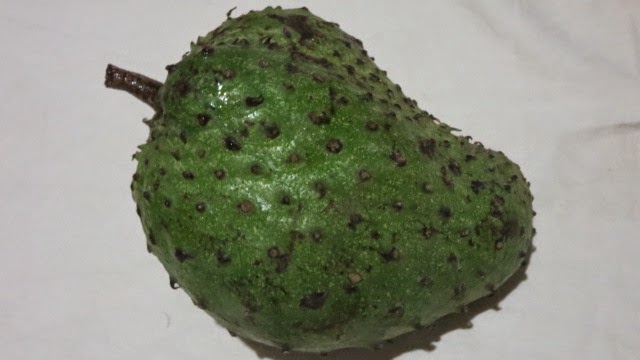
 My first weekend in Accra and an opportunity to get out and about and see a bit of the city. But before that, I had to stock up on some essentials and so headed, with my host, Odette, to buy some fruit at the market. This was, hands down, the best looking fruit stall I have ever seen, and I came away with as many mangos and avocados as I could manage – as well as this hitherto unknown delight. Is it a prickly pear? I’m not sure.


Ben had kindly agreed to being my Jamestown tour guide for the day and we were planning on setting off on my first day of sightseeing at 1 o’clock. Unfortunately, the day was delayed somewhat when the car failed to start, resulting in Ben peering into the bonnet and playing around with some very unsafe looking copper wires (I couldn’t watch). My concerns, however, seemed misplaced as Ben eventually got the car going without injury and we headed into town, with the aid of some friendly passersby who gave the car a push to help us on our way.

Our first stop was Nkrumah Circle (known locally as plain old “Circle”), a bustling transport hub and a major junction where the Ring Road meets the main North-South road heading through the Old Town. As well as being a major landmark, taxi rank and bus station, Circle is the place to get fixed whatever you might need fixing, and we made our way through a labyrinth of electronics shops to a shady looking shack where I hoped to get my phone unlocked so that I could get a Ghanaian SIM card. This didn’t seem to be a problem and I handed my phone over with instructions to pick it up later.

We headed next to the Jamestown Lighthouse, stopping on route at another electronics store in a Jamestown alleyway so that Ben could drop of his TV for repairs. As Ben saw to his errands, I waited outside and was quickly surrounded by a small crowd of young children who were clearly fascinated by the obruni (white person) standing outside their house. After lots of pointing and staring from afar, one of the older kids finally plucked up the courage to come closer to me and ask me my name. Assured then that I was friendly, I was quickly engaged in conversation with Kofi, Gladys, Yasmine and several others who, although were told several times that I was from Britain, were absolutely convinced that I was from India on account of my diamonte nose stud.

My first impression of Jamestown, one of the oldest parts of Accra, was that it was a world away from the quiet, immaculate avenues of Abelemkpe (see earlier post on “First Impressions”). Jamestown’s small alleyways are teeming with people, shops and cars. It is quite a full on experience for the uninitiated and, had I not been with Ben, I certainly would have struggled to find my way around. A high proportion of poverty is evident from the slums, but amongst the shacks rise some rather beautiful Victorian buildings, even if most are in a state of disrepair. It is certainly a characterful neighbourhood.


We headed down to the red and white lighthouse on the sea front. The, still working, lighthouse was built in the 1930s, but a lighthouse has stood on that spot since the nineteenth century. On account of my broken ankle, as well as a general dislike of spiral staircases, I declined Ben’s suggestion to climb the 90ish steps to the top (even though there is apparently a great view from up there). Instead we headed downhill to the fishing community at the base of the lighthouse, in the shadow of James Fort, a colonial era prison that is currently closed to the public (though is apparently opening as a museum very soon).

The fishing community, though plainly impoverished, is worth taking a stroll around for two reasons. First, because of the warmth of the community members and second to get a view of the colourful canoes, tangled up in fishing nets, that blanket the shore. Ben and I walked through the slums, past women selling delicious looking red snapper, out towards the ocean to watch the fishermen coming in. They work from very long, narrow canoe boats that are delightfully painted and, as with everything else in Ghana, endorsed with a passage from the Bible, a psalm or a simple religious message. I also saw men at work carving the canoes. They are made from enormous single pieces of wood. Each one is carved by four or five men, and takes around two weeks.


From the lighthouse we drove through the busy streets of Jamestown, past the heaving Makola Market to the Centre for National Culture, which rather than being a cultural centre as I would understand it, is really a craft market selling items like wood carvings, djembe drums, tribal masks, woven fabrics, and some lower-end souvenirs like bangles  and Black Star football shirts. Unfortunately, owing to our car difficulties (which lingered on throughout the day – every time we restarted the vehicle we had to enlist the help of obliging others in giving us a push) we got to the Centre rather late in the day when most stalls were closing up. Despite this, there was still a degree of hassle to buy, albeit mostly non-aggressive and friendly.

Before jumping back in the car, Ben and I stopped to pick up snack of corn-on-the-cob, freshly roasted by the side of the road. Corn-on-the-cob in Ghana tastes rather different to corn-on-the-cob at home. The corn is smaller and much sweeter and is delicious eaten with a small piece of coconut. I told Ben that at home corn-on-the-cob is often eaten with butter. This was not only met with disbelief but with Ben nearly lying crippled on the floor rolling with laughter. Such is the absurdity of barbequed corn with butter, apparently.

On our drive through town I had noticed several funeral gatherings taking place. I was already aware that funerals are a very big deal in Ghana and that after a person’s death several “celebrations” take place, including a “celebration of life” one week after the death and a funeral service later on. The funeral gatherings were easy to spot: crowds of immaculately dressed people decked from top to toe in red and black. Apparently before attending a funeral it is customary for mourners to buy brand new red and black special funeral fabric and have it made into a new outfit. However, at one point we passed a huge gathering of people all dressed in matching white and blue outfits. I asked Ben if that was a wedding.
          “No”, he explained. “This is a funeral too. But the person who died was over 90 years old. To live so long makes a person very blessed. So we don’t wear black, we wear red to celebrate the person’s good fortune.”

          That to me sounds like a very nice idea. 

Republic, Osu

Accra is renowned for its nightlife. Having a broken ankle I wasn’t particularly keen on going dancing, but I was keen to sample the bar scene that Accra is now famous for. So I joined my colleagues for drinks after work.

It seems that Friday is the day that Ghanaian office workers shun formal office attire in favour of traditional African dress. This meant that everyone in the office looked absolutely brilliant. Next to the colourful prints and impeccably tailored, sculptured dresses, my black skirt and navy shirt looked drab to say the least. Nevermind. That wouldn’t stop me going out, especially when I had France v Germany to tune into, and a host of brand new work-mates to get to know.

So I went with a number of my new colleagues into Osu. Osu is the best place in the city to find bars and restaurants. We all settled into Republic, a small bar just off of Oxford Street, in the heart of Osu. If any travellers to Ghana stumble upon this blog when looking for recommendations for places to eat and drink, I would heartily recommend Republic to them. Trendy, but extremely laid back, this little red bar with plenty of outdoor seating didn’t disappoint. The staff were friendly, the large outdoor screen satisfied all my World Cup viewing needs, and the hibiscus cocktail was delicious and cheap. And don’t miss the fried cassava. Yum.