Showing posts with label Makola Market. Show all posts

Tuesday, 15 July 2014

Fabric Shopping

I had it on good authority from a number of friends who have previously lived in or visited Ghana, that some of the best fun you can have in the country is having clothes made at a fraction of the price you would spend at home. A large part of the fun comes from browsing the many gorgeous batik fabrics on offer (patterned cloths made using wax to build up blocks of colour) for which Ghana is so famous. Find yourself a seamstress/tailor and ask them to recommend how much fabric you need for your particular items in advance of buying. As a rough guide (though this will very much depend on your size), two yards should make a shirt or skirt, two-three yards should make a short dress. For a very long dress you might need four yards, to be on the safe side.

Having had a seamstress recommended by one of my colleagues, and having a few items in mind, I decided to dedicate Saturday to fabric buying, so that I would have enough time to get everything made before leaving (it can take a seamstress around a week to make a dress, and then sometimes several fittings are then required to make sure the fit is perfect). I jumped in a tro-tro and headed into Old Accra.

If you take a tro-tro to Accra it is likely you are going to disembark at the chaos that is Tema Station. It’s a maze. It is probably better not to try and understand it, but just go with the flow. There are people absolutely everywhere, tro-tros everywhere and vendors all over the place selling all sorts. There is an overpowering smell of sweat, petrol, sewage and smoked fish, which you will find for sale just about everywhere, glistening in yellow oil.


At the far end of the station a small rocky path will take you out into a market place. Just about everything is on sale here and is worth taking a quick look around (though be warned people in this area do not approve of photo-taking). Keep moving quickly, though, or else you’ll be jostled to the side by ladies carrying enormous loads balanced on their heads. The market sells fruits, fish, homewares, basic provisions like toothpaste and washing up liquids, clothes, and just about everything else (in the tro-tro home the woman beside me had purchased an actual kitchen sink). There are also a fair few fabric stalls to browse, selling materials by the yard. These are good options for fabric buying if you only need a yard or two. However, for more choice head to Makola Market…which is just what I did.

Makola Market is a short walk away from Tema Station. It covers an enormous area and is made up of both outdoor stalls and several blocks of shops. Again, just about everything you could need is on offer here. I was even confronted by a man selling rodent killer and who demonstrated his product’s effectiveness by waving in front of my face two dead mice tied up on a piece of string. Lovely.

Makola Market is centred around Makola Square. You’ll know it by the huge concrete arch in the middle (it looks a lot like half a giant McDonald’s “M”). Immediately around the big arch are lots of stalls selling clothing, bangles, soaps, homewares etc, as well as a few restaurants to sit and enjoy a drink when Makola gets too much. I passed a stall selling Christian music CDs. Strangely, rather than playing gospel, this particular stall was blasting Johnny Cash through its speakers. I’m not entirely convinced that “I shot a man in Reno, just to watch him die”, is entirely the Evangelical message!

If you pass through the big arch and through the square you will find yourself surrounded by shopping streets which, again, can be quite overwhelming. If you are after fabrics you want the shops directly in front of the square. Here you will find warehouses stacked from floor to ceiling with beautiful fabrics of every colour of the rainbow and every possible design.

I found myself browsing the warehouses for several hours, chatting away to all the salesladies as I went. One lady asked me if I would be interested in marrying her son; another asked me my Twi name;* another explained to me all about funeral fabrics;** and another, on discovering I was British, proceeded to ask me just why the Queen refused to abdicate and made it quite clear she hadn’t been a fan of the royal family since the death of Princess Di.

After several hours of browsing and chatting I finally settled on a selection of fabrics with which I intend to make a couple of dresses and a trouser suit. If you do buy fabrics in Makola, be aware that most of the stuff on offer at the warehouses (where you will get by far the biggest selection) are wholesale only. This means you’ll have to buy a minimum of six yards of each piece. There are a few places selling by the single yard but with nowhere near as big a selection. Given the choice on offer, I would advise buying direct from the wholesaler. Six yards comes in at around 30-35 cedis (around £6-7). If you buy per yard, this is normally around 10 cedis (£2) per yard anyway, and if you need 3 yards for a dress, buying in bulk from the wholesaler doesn’t cost you too much more.

For anyone who wants to shop in a more relaxed atmosphere, free from smoked fish and mice on string, there are a couple of places in Osu that you could try. Woodin’s on Oxford Street stocks a range of high quality fabrics and readymade items. You can also find some very beautiful designs in a small store in Oxford Street Mall. Sarah’s Fabrics on 15th Street, just off Oxford Street (opposite the petrol station at the northern end) doesn’t stock batik, but is a good place to pick up lining and also raw silk in a variety of colours, should African print not be your thing.

* In Ghana, many people are named according to the day on which they were born. I was born on a Friday, so my Twi name is Efia.

** When someone dies, it is customary to have a whole new outfit made for the funeral, typically in the colours red and black.

Monday, 7 July 2014

Jamestown

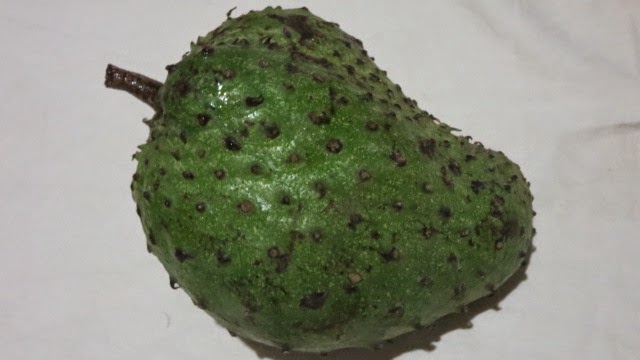
 My first weekend in Accra and an opportunity to get out and about and see a bit of the city. But before that, I had to stock up on some essentials and so headed, with my host, Odette, to buy some fruit at the market. This was, hands down, the best looking fruit stall I have ever seen, and I came away with as many mangos and avocados as I could manage – as well as this hitherto unknown delight. Is it a prickly pear? I’m not sure.


Ben had kindly agreed to being my Jamestown tour guide for the day and we were planning on setting off on my first day of sightseeing at 1 o’clock. Unfortunately, the day was delayed somewhat when the car failed to start, resulting in Ben peering into the bonnet and playing around with some very unsafe looking copper wires (I couldn’t watch). My concerns, however, seemed misplaced as Ben eventually got the car going without injury and we headed into town, with the aid of some friendly passersby who gave the car a push to help us on our way.

Our first stop was Nkrumah Circle (known locally as plain old “Circle”), a bustling transport hub and a major junction where the Ring Road meets the main North-South road heading through the Old Town. As well as being a major landmark, taxi rank and bus station, Circle is the place to get fixed whatever you might need fixing, and we made our way through a labyrinth of electronics shops to a shady looking shack where I hoped to get my phone unlocked so that I could get a Ghanaian SIM card. This didn’t seem to be a problem and I handed my phone over with instructions to pick it up later.

We headed next to the Jamestown Lighthouse, stopping on route at another electronics store in a Jamestown alleyway so that Ben could drop of his TV for repairs. As Ben saw to his errands, I waited outside and was quickly surrounded by a small crowd of young children who were clearly fascinated by the obruni (white person) standing outside their house. After lots of pointing and staring from afar, one of the older kids finally plucked up the courage to come closer to me and ask me my name. Assured then that I was friendly, I was quickly engaged in conversation with Kofi, Gladys, Yasmine and several others who, although were told several times that I was from Britain, were absolutely convinced that I was from India on account of my diamonte nose stud.

My first impression of Jamestown, one of the oldest parts of Accra, was that it was a world away from the quiet, immaculate avenues of Abelemkpe (see earlier post on “First Impressions”). Jamestown’s small alleyways are teeming with people, shops and cars. It is quite a full on experience for the uninitiated and, had I not been with Ben, I certainly would have struggled to find my way around. A high proportion of poverty is evident from the slums, but amongst the shacks rise some rather beautiful Victorian buildings, even if most are in a state of disrepair. It is certainly a characterful neighbourhood.


We headed down to the red and white lighthouse on the sea front. The, still working, lighthouse was built in the 1930s, but a lighthouse has stood on that spot since the nineteenth century. On account of my broken ankle, as well as a general dislike of spiral staircases, I declined Ben’s suggestion to climb the 90ish steps to the top (even though there is apparently a great view from up there). Instead we headed downhill to the fishing community at the base of the lighthouse, in the shadow of James Fort, a colonial era prison that is currently closed to the public (though is apparently opening as a museum very soon).

The fishing community, though plainly impoverished, is worth taking a stroll around for two reasons. First, because of the warmth of the community members and second to get a view of the colourful canoes, tangled up in fishing nets, that blanket the shore. Ben and I walked through the slums, past women selling delicious looking red snapper, out towards the ocean to watch the fishermen coming in. They work from very long, narrow canoe boats that are delightfully painted and, as with everything else in Ghana, endorsed with a passage from the Bible, a psalm or a simple religious message. I also saw men at work carving the canoes. They are made from enormous single pieces of wood. Each one is carved by four or five men, and takes around two weeks.


From the lighthouse we drove through the busy streets of Jamestown, past the heaving Makola Market to the Centre for National Culture, which rather than being a cultural centre as I would understand it, is really a craft market selling items like wood carvings, djembe drums, tribal masks, woven fabrics, and some lower-end souvenirs like bangles  and Black Star football shirts. Unfortunately, owing to our car difficulties (which lingered on throughout the day – every time we restarted the vehicle we had to enlist the help of obliging others in giving us a push) we got to the Centre rather late in the day when most stalls were closing up. Despite this, there was still a degree of hassle to buy, albeit mostly non-aggressive and friendly.

Before jumping back in the car, Ben and I stopped to pick up snack of corn-on-the-cob, freshly roasted by the side of the road. Corn-on-the-cob in Ghana tastes rather different to corn-on-the-cob at home. The corn is smaller and much sweeter and is delicious eaten with a small piece of coconut. I told Ben that at home corn-on-the-cob is often eaten with butter. This was not only met with disbelief but with Ben nearly lying crippled on the floor rolling with laughter. Such is the absurdity of barbequed corn with butter, apparently.

On our drive through town I had noticed several funeral gatherings taking place. I was already aware that funerals are a very big deal in Ghana and that after a person’s death several “celebrations” take place, including a “celebration of life” one week after the death and a funeral service later on. The funeral gatherings were easy to spot: crowds of immaculately dressed people decked from top to toe in red and black. Apparently before attending a funeral it is customary for mourners to buy brand new red and black special funeral fabric and have it made into a new outfit. However, at one point we passed a huge gathering of people all dressed in matching white and blue outfits. I asked Ben if that was a wedding.
          “No”, he explained. “This is a funeral too. But the person who died was over 90 years old. To live so long makes a person very blessed. So we don’t wear black, we wear red to celebrate the person’s good fortune.”

          That to me sounds like a very nice idea.